
What Is a USDOT Number and Do You Need One?
What is a USDOT number?
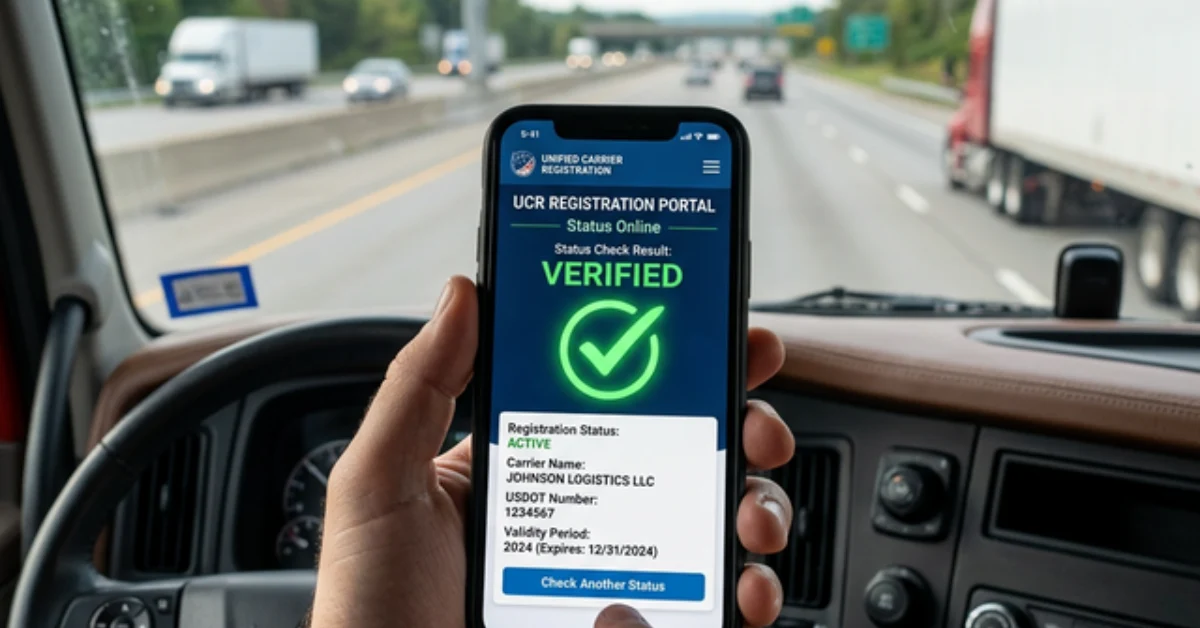
A USDOT number is a unique identifier the Federal Motor Carrier Safety Administration (FMCSA) assigns to your trucking operation. Think of it as a license plate for your business, not your truck. The FMCSA uses it to track your safety record, crash reports, roadside inspections, and audit history over time.
If you operate a commercial motor vehicle in interstate commerce and meet certain thresholds, federal rules require you to register for a USDOT number before you hit the road. It is free to obtain directly from the FMCSA.
Do you need a USDOT number?
Generally, you need a USDOT number if you operate a commercial motor vehicle in interstate commerce (crossing state lines, or hauling freight that originated in or is bound for another state or country) and any of the following apply:
- Your vehicle has a gross vehicle weight rating (GVWR), gross combination weight rating, gross vehicle weight, or gross combination weight of 10,001 pounds or more.
- You transport 9 or more passengers (including the driver) for compensation, or 16 or more passengers not for compensation.
- You haul hazardous materials in a quantity that requires placarding.
Many states also require a USDOT number for intrastate operations (driving only within one state). State thresholds vary, so a vehicle that would not need a number federally may still need one under your state's rules. Always confirm your specific situation with the FMCSA and your state's department of transportation or motor vehicle agency.
USDOT number vs. MC number
These two are easy to confuse, but they do different jobs:
- USDOT number identifies your company for safety and compliance tracking. Almost every regulated carrier needs one.
- MC (Motor Carrier) number, sometimes called operating authority, is required if you transport regulated commodities or passengers for hire across state lines. Not every operation needs an MC number, but if you do, you typically need both.
A private carrier hauling its own goods may need only a USDOT number, while a for-hire carrier moving someone else's freight interstate usually needs both. When in doubt, check the FMCSA's requirements directly.
How to get a USDOT number
You register online through Motus, the FMCSA's USDOT registration system. At a high level, the process looks like this:
- Gather your business details: legal name, address, EIN or SSN, and information about your vehicles and operation.
- Decide your operation type (private, for-hire, exempt) and what you'll carry.
- Complete the FMCSA application (the MCS-150 / Form MCS-150 and related forms).
- Receive your USDOT number, usually quickly once the application is processed.
QuickTruckTax can help you understand the requirements, prepare your information, and validate that your details are consistent before you go to the official FMCSA system to register. We do not submit anything to the FMCSA on your behalf, and we are not a substitute for the agency's own guidance.
Keeping your USDOT number active
Getting the number is only the start. You're required to keep it current:
- Biennial update: The FMCSA requires you to update your MCS-150 information every two years, even if nothing has changed. Missing this can lead to deactivation, although FMCSA has temporarily suspended that enforcement for updates due on or after June 1, 2026 while it moves registration to its new Motus system.
- Operational changes: Update your record if your address, fleet size, operation type, or company name changes.
- Display the number: Most regulated commercial vehicles must display the USDOT number on both sides of the vehicle, legibly and in contrasting color.
How this connects to Form 2290 and HVUT
If you operate heavy vehicles, the Heavy Highway Vehicle Use Tax (HVUT) on Form 2290 is a separate federal obligation from your USDOT registration, but they often apply to the same trucks.
Here are the well-established Form 2290 facts:
- The tax applies to highway vehicles with a taxable gross weight of 55,000 pounds or more.
- At 55,000 pounds the tax is $100, plus $22 for each 1,000 pounds over 55,000.
- The maximum tax is $550, reached at 75,000 pounds and above.
- The tax period runs July 1 through June 30.
- For a vehicle in use in July, the filing deadline is August 31.
QuickTruckTax helps you prepare and validate your Form 2290 so the numbers are right before you file with the IRS. As with USDOT registration, confirm current rules and any fees on the official IRS and FMCSA websites, since this article is general guidance and not legal or tax advice.
The bottom line
If you run a commercial vehicle over 10,000 pounds across state lines, carry passengers for hire, or move placarded hazardous materials, you almost certainly need a USDOT number, and many states require one even for in-state operations. It's free to register, but you must keep it updated every two years to stay compliant. Check your exact obligations with the FMCSA and your state agency, and treat your USDOT number as a permanent part of your operation's identity.